
Dental Implants | Specialist Surgical Care
A stronger foundation for your new smile.
Dental implants are planned around more than a missing tooth. Bone, gum tissue, implant position, the final restoration, and long-term care all matter.
Explore a consultation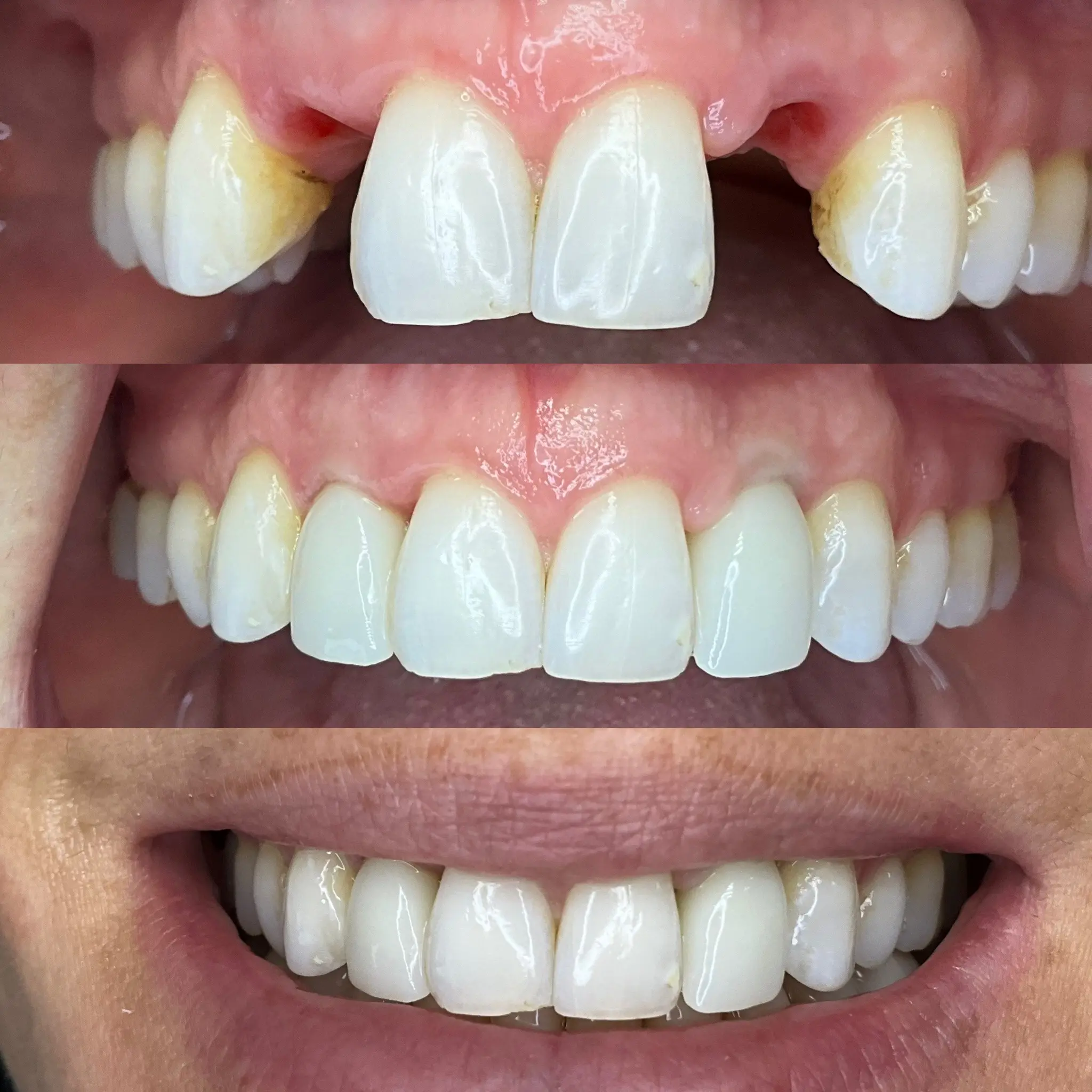
Plan the foundation. Then place the implant.
As a periodontist and dental implant surgeon, I evaluate the living tissues that support an implant: the jawbone and the surrounding gums. Treatment starts with the desired final tooth or teeth and works backward to the right surgical plan.
Some people need one implant. Others benefit from extraction planning, bone or soft-tissue grafting, or a coordinated full-arch reconstruction. The approach depends on your anatomy, health, and goals.
Position is part of the result.
A dental implant is an artificial tooth root placed in the jawbone to support a crown, bridge, or full-arch restoration. The position of that root affects the appearance of the tooth, the surrounding gum contour, your bite, and how easily you can clean it.
When appropriate, three-dimensional imaging and digital planning help evaluate bone, adjacent roots, nerves, and sinuses before surgery. Your restorative dentist and implant surgeon can coordinate the final tooth design with the surgical plan.
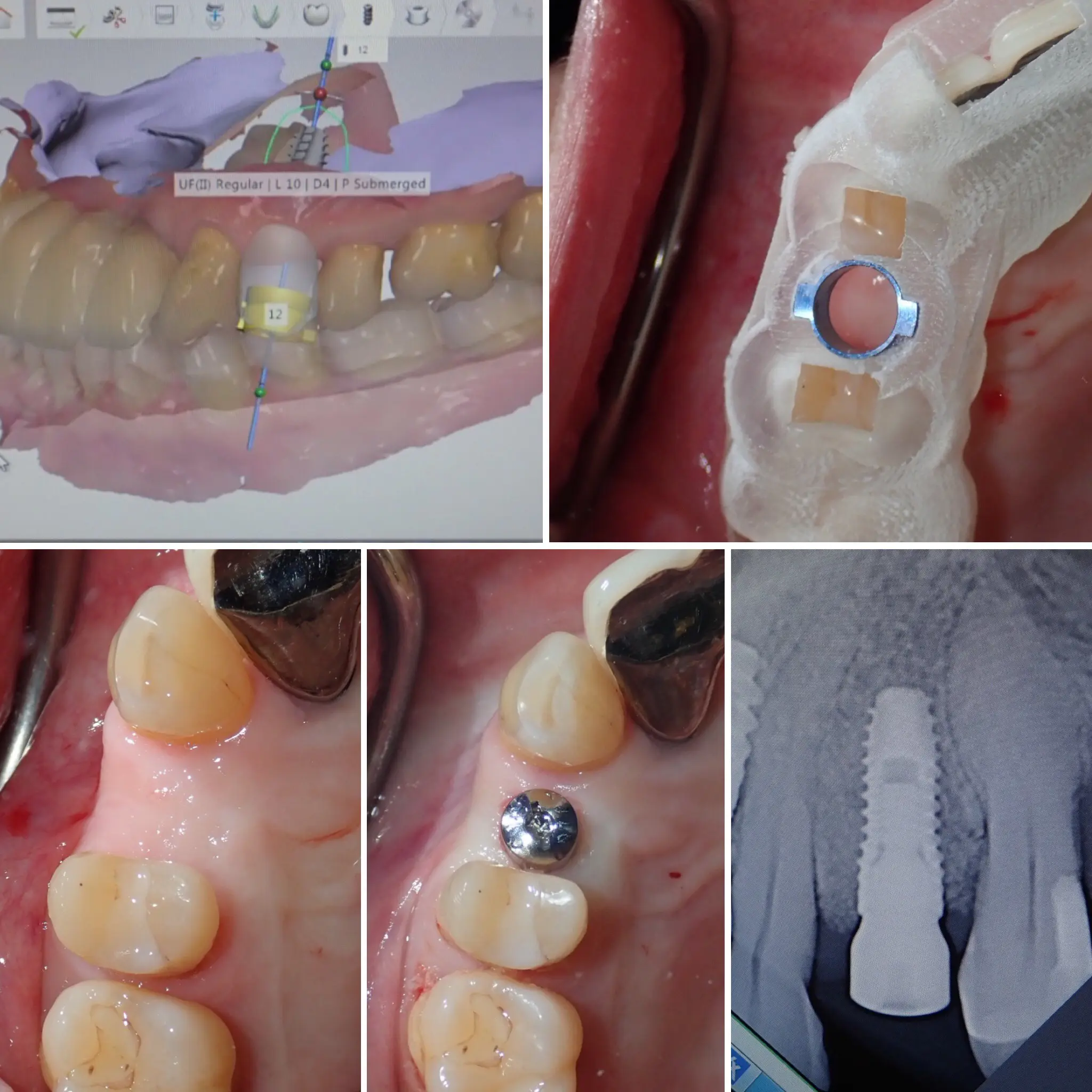
Digital planning and guided surgery clinical example.
Care shaped around your site.
Evaluate
Review your medical and dental history, periodontal health, bite, available bone, gum tissue, and imaging as indicated.
Prepare & place
Extraction, socket preservation, bone regeneration, or tissue grafting may be needed before or alongside implant placement.
Restore & maintain
After appropriate healing, your restorative dentist completes the prosthetic teeth. Home care and professional follow-up protect the result.
From one tooth to an entire arch.
The number and placement of implants follow the planned restoration and the available anatomy. Treatment timing differs from person to person.
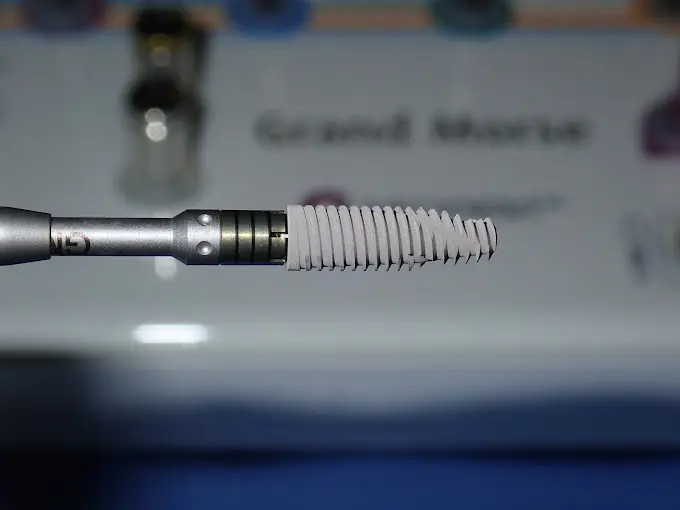
Single tooth
An implant can support one crown without preparing neighboring teeth as bridge supports. Front teeth demand particular attention to gum contours and appearance.
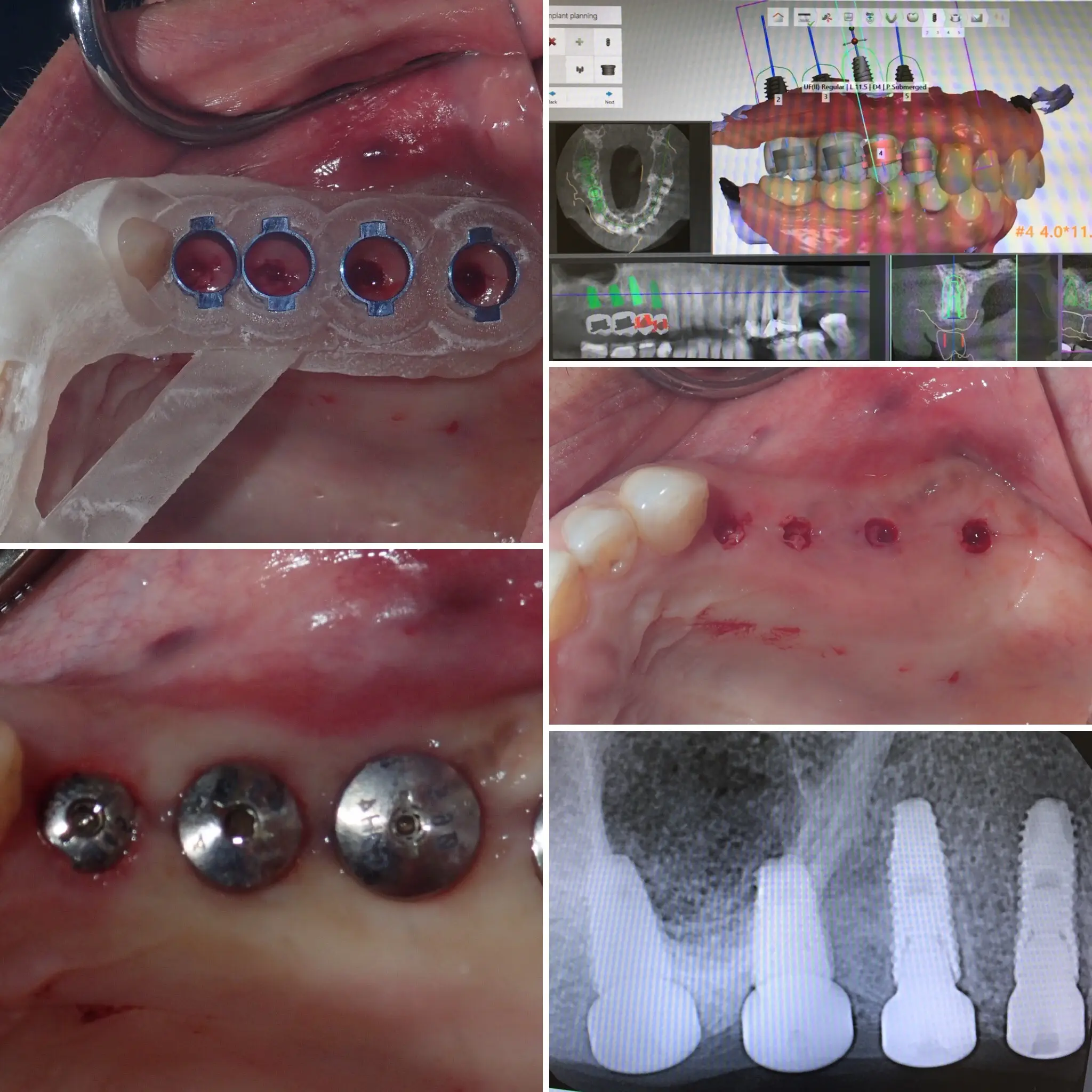
Several teeth
Strategically placed implants can support separate crowns or a bridge. Planning considers spacing, bite forces, cleanability, and bone support.
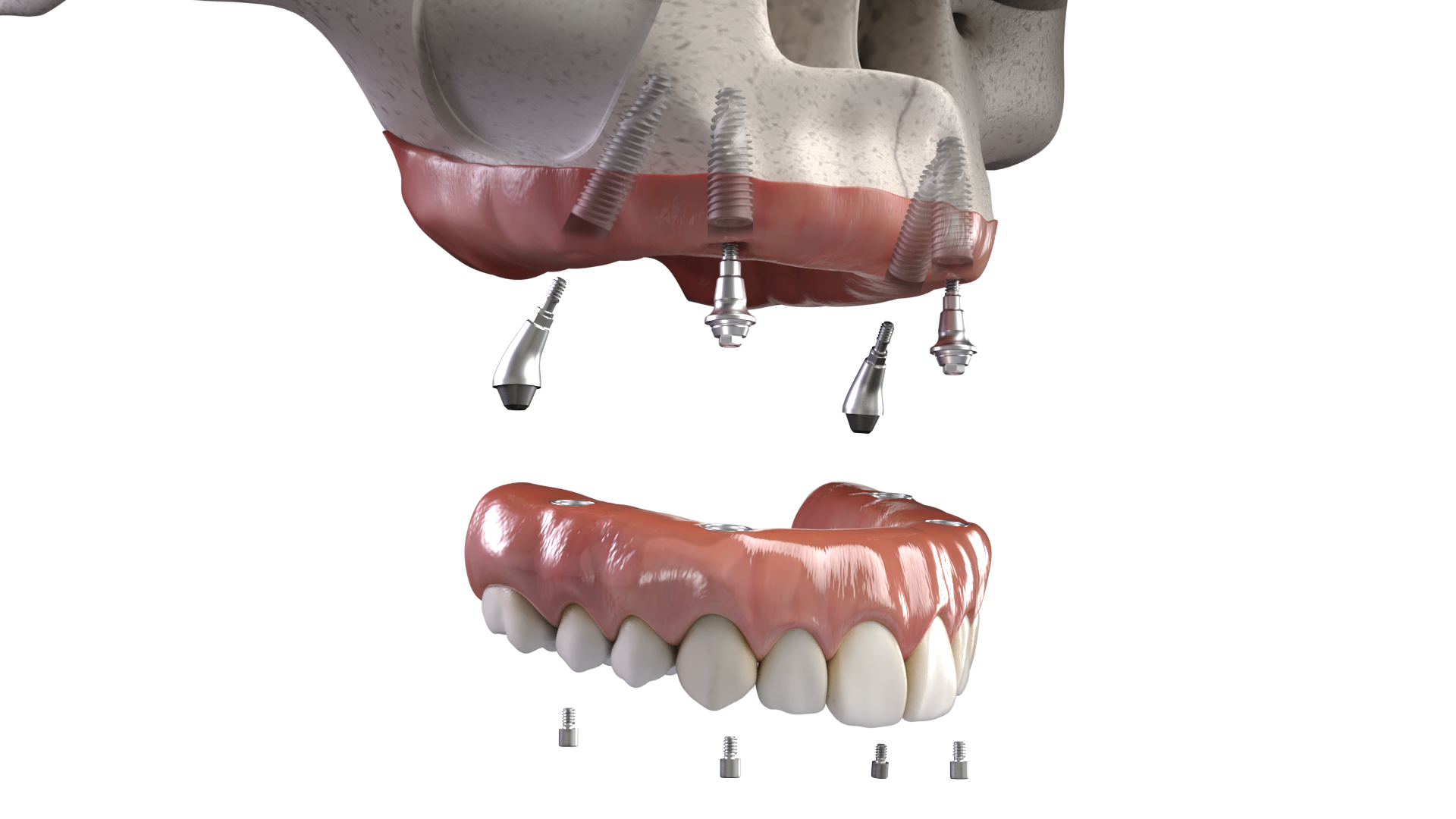
Full arch
Multiple implants may support a fixed full-arch restoration. Prosthetic design, tissue health, access for cleaning, and maintenance all influence the plan.
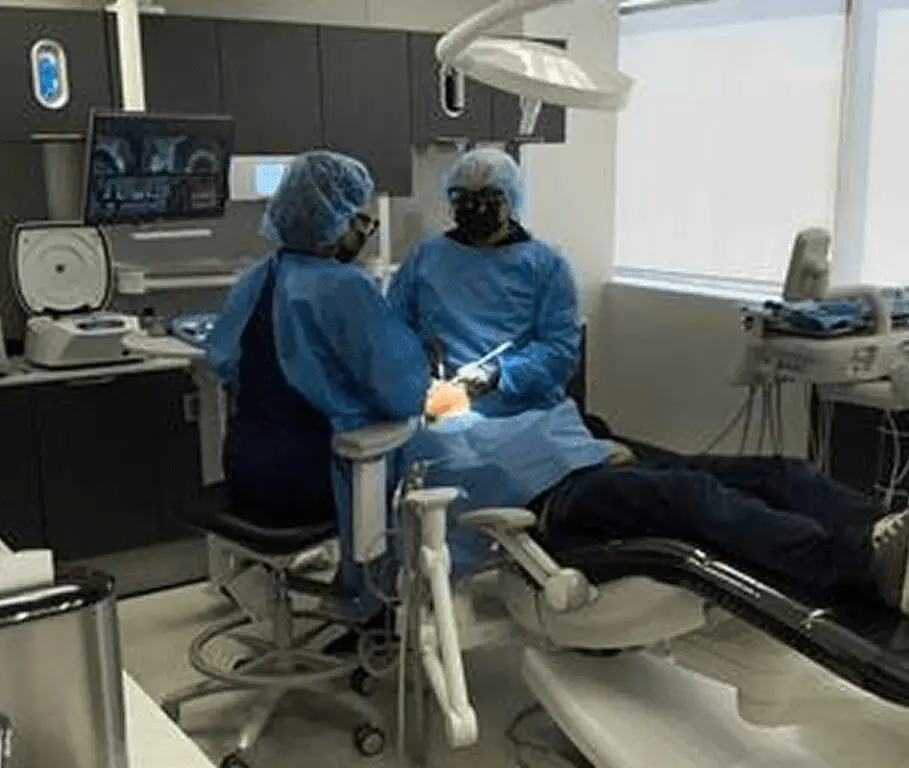
Surgical care in the operatory.
When the foundation needs rebuilding.
Bone can shrink after tooth loss or periodontal disease. A limited ridge does not automatically rule out implants. Depending on the site, socket preservation, ridge augmentation, or sinus augmentation may create a more suitable foundation.
Gum thickness and architecture matter too, especially in visible areas. Soft-tissue grafting can be considered when the tissue needs additional support or improved maintainability. These procedures are recommended selectively after examination.
View a surgical bone-grafting example (graphic clinical imagery)
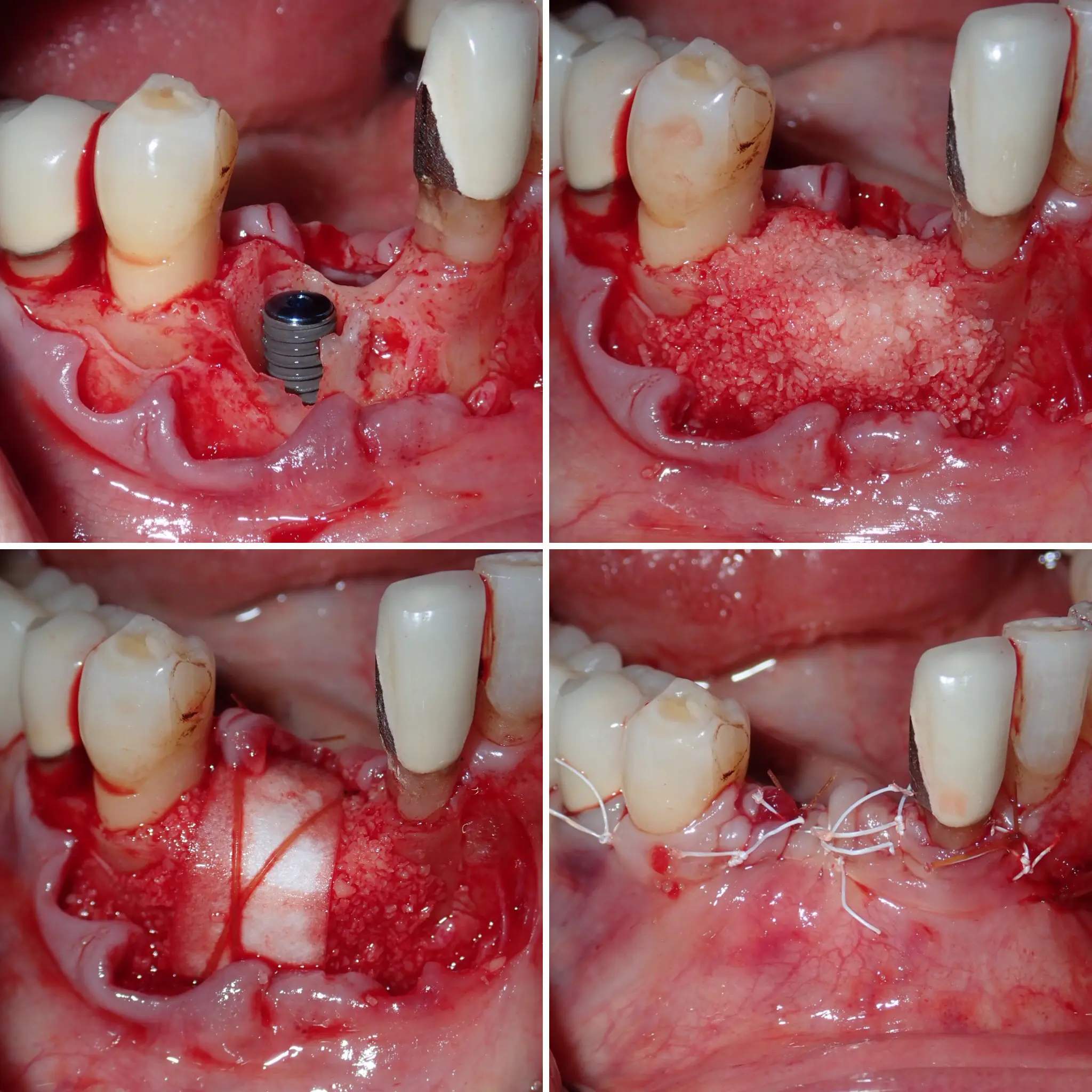
Implant placement with bone augmentation. Clinical example; individual treatment and healing vary.
The plan and the final restoration.
These images show different parts of implant care. They illustrate treatment possibilities, not a promise of the same outcome for every patient.
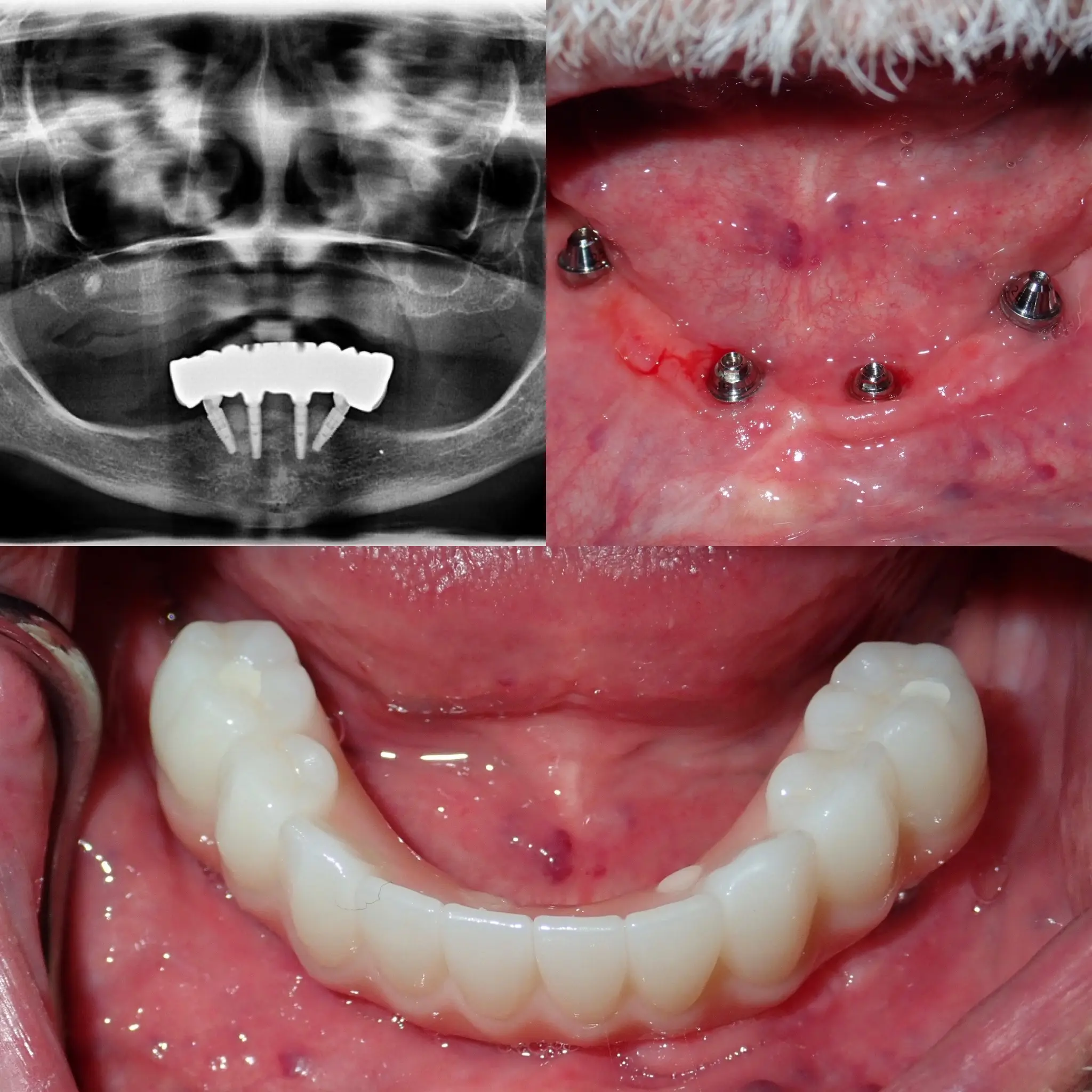
Implant care continues after the new tooth is placed.
Dental implants need daily cleaning and regular professional monitoring. Bacterial buildup can inflame the tissue around an implant; progressive disease can also affect supporting bone. A history of periodontal disease, smoking, and other health factors may influence risk.
We evaluate the tissues around implants over time and coordinate maintenance with your dental team. A restoration that is easy to clean is part of good treatment planning.
What patients often ask.
Can I have an implant if I have lost bone?
Possibly. The amount and location of bone loss determine whether grafting, another implant position, or another treatment approach is appropriate. An examination and imaging can clarify your options.
Can an implant be placed when a tooth is extracted?
Sometimes. Immediate placement depends on the socket, infection or inflammation, available bone, soft tissue, and ability to position the implant for the planned restoration. A staged plan may be more suitable in other cases.
How long does treatment take?
Timing varies with healing, grafting needs, and the type of restoration. Your individual sequence and expected appointments are discussed after evaluation.
Who makes the final tooth?
Implant surgery and the finished restoration are coordinated. A restorative dentist typically fabricates and places the crown, bridge, or full-arch prosthesis after surgical healing and assessment.